RSS

Your First Home Was Never Meant to Be Your Forever Home

There’s a lot of pressure when buying a home, especially your first one.

You want the right neighbourhood, enough bedrooms, a great kitchen, a backyard, parking, maybe a home office and, while we’re at it, something you’ll still love 20 years from now.

But after more than 20 years as a REALTOR® in Halifax, and several moves of my own, there’s one thing I know: Your first home was never meant to be your forever home. It was meant to help you build a life and build the financial foundation for whatever came next.

I believe that because I’ve lived it myself.

I’ve Moved Around Halifax Too

I’ve owned homes in Halifax’s South End, West End, Bedford and Fall River, and I’ve owned three different homes in Bedford alone.

That might sound like a lot of moving, but every home made sense for a different stage of my life.

And here’s the important part: moving has also helped me build wealth through real estate.

Each home gave me somewhere to live and enjoy my life, but it was also an asset. As I paid down mortgages and property values changed over time, I built equity. That equity helped give me options when it was time for the next move.

I didn’t buy my first home expecting it to be my last.

And I’m very glad I didn’t.

Your First Home Is a Starting Point

I think some first time buyers in Halifax, Dartmouth, Bedford and Fall River get stuck on the idea that their first purchase needs to check every box.

It doesn’t.

Maybe your first home is a condo in Dartmouth when you really dream about a house in Bedford.

Maybe it’s a smaller home in Halifax without the dream kitchen.

Maybe you buy farther outside the city because it gives you more house and property for your budget.

That doesn’t mean you’re settling.

You’re starting.

The question I often encourage buyers to ask isn’t, “Could I live here forever?”

It’s, “Does this home make sense for me right now?”

Real Estate Can Be a Stepping Stone

One of the things I’ve learned both personally and professionally is that real estate can be a series of stepping stones.

You buy what makes sense for your life and finances today.

You live there. You pay down your mortgage. You make improvements where they make financial sense. And over time, you may build equity that can help you make your next move.

Of course, real estate values aren’t guaranteed to increase, and every purchase needs to make financial sense on its own. But historically, homeownership has been one way Canadians have built long term household wealth.

That’s why I don’t want first time buyers so focused on finding the “perfect” house that they overlook a really good opportunity.

Your Life Changes, and Your Home Can Too

What you need at 28 may look completely different from what you need at 38, 48 or 62.

Maybe you need more bedrooms.

Maybe you want to leave the city for more space in Fall River.

Maybe you’re tired of commuting and want to be closer to work in Halifax or Dartmouth.

Maybe you want the amenities and neighbourhood feel of Bedford.

Or maybe you’ve reached the stage where the big house and big yard aren’t nearly as appealing as they once were.

I’ve moved because my life changed too.

There’s nothing wrong with a home having served its purpose and then deciding it’s time for something different.

Don’t Forget About the Equity You’ve Built

This is one of the first conversations I have with homeowners who tell me they’d like to move but don’t know whether they can afford it.

Before deciding that you’re stuck, find out what your current home may actually be worth.

How much do you owe on your mortgage?

What could your home realistically sell for in today’s market?

What would you have left after selling costs?

Sometimes homeowners are genuinely surprised by how much equity they’ve accumulated.

That equity may become part of the down payment on the next home. It could allow you to reduce your mortgage. Or it may simply give you choices you didn’t realize you had.

You may be sitting in the house that can help pay for what comes next.

Buying Your First Home in Halifax, Dartmouth, Bedford or Fall River?

Don’t dismiss a good home simply because you can’t picture yourself living there forever.

Look at the bigger picture.

Is it affordable for you? Is it in a location with reasonable resale appeal? Does the layout work? Is the property in good condition? Will it meet your needs for the next several years?

And perhaps most importantly, does buying it make financial sense?

After more than two decades helping people buy and sell real estate in HRM, I can tell you that some of the smartest purchases aren’t necessarily the prettiest houses or the ones with every item on the wish list.

They’re the homes that make sense.

That has certainly been true in my own life.

From the South End and West End of Halifax to Bedford and Fall River, my address has changed many times over the years. Each home represented a different chapter, and collectively, those decisions have helped me build wealth through real estate.

Your first home doesn’t need to be the finish line.

It just needs to be a smart place to start.

Thinking About Your Next Move?

Whether you’re buying your first home, wondering how much equity you’ve built, or thinking about moving within Halifax, Dartmouth, Bedford, Fall River or elsewhere in HRM, start with the numbers.

Sometimes the home you’re living in today is exactly what makes the next chapter possible.

Sandra Chaisson, REALTOR®
ONE Real Estate Group
Royal LePage Atlantic
Serving Halifax, Dartmouth, Bedford, Fall River and communities throughout HRM for over 20 years


Read

Banana Bread

I made "The Ultimate Banana Bread" yesterday - since I have had some free time on my hands right now I've been baking ...

This recipe comes from smittenkitchen.com


You’re going to need 5 bananas which I thought was just bananas...


  • 1/2 cup (4 ounces or 115 grams) unsalted butter, cut into chunks, plus more for pan

  • 1 cup (190 grams) packed light brown sugar

  • 2 slightly heaped cups (about 18 ounces or 510 grams) (updated weight, see why) of mashed banana, from 4 extra-large or 5 medium-large bananas

  • 2 large eggs

  • 1 teaspoon (5 ml) vanilla extract

  • 1 teaspoon fine sea or table salt

  • 1 heaped teaspoon ground cinnamon

  • A few gratings of fresh nutmeg (optional)

  • 1 teaspoon baking soda

  • 1 teaspoon baking powder

  • 2 cups (260 grams) all-purpose flour

  • 2 tablespoons (25 grams) raw or turbinado sugar (on top)

Heat oven to 350 degrees F. Butter a 6-cup (9×5-inch) loaf pan (see note up top if yours is smaller) or coat it with a nonstick cooking spray and set aside.


Melt butter in a large bowl and whisk in brown sugar until smooth, then stir in mashed banana. Whisk in eggs and vanilla. Sprinkle the surface of the batter evenly with salt, cinnamon, nutmeg (if using), baking soda, and baking powder, and whisk until the ingredients are fully dispersed in the batter, and then whisk 10 more times around the bowl because it’s better to be overly cautious than to end up with unmixed pockets. Add flour and stir until combined. Scrape batter into prepared loaf pan. It should come to just over 1/2-inch from the top rim. Sprinkle the top of the batter with the raw sugar; it will seem like a lot but will bake up beautifully.

Bake banana bread for 55 to 65 minutes. It is done when a toothpick or skewer inserted into the bread is batter-free — be sure to check the upper third as well, near the rim of the pan; that’s where I’d find the unbaked pockets of batter hanging out. The bread will get very dark but will not taste burnt.

Let cool in pan. This banana bread is good on the first day but exceptional on the second and third if you can bear to wait.


Read

How To Create a Wants vs Needs List - 4 Easy Steps

The quest for the perfect home within a limited budget can seem daunting. But here's the truth: the perfect home doesn't really exist. Instead, it's about finding a home that aligns with your needs and has the potential to evolve with you. In this blog, I'll share my insights on how to find the right home without compromising on your budget.

  1. Letting Go of Perfection: To embark on your home search, it's crucial to let go of the idea of a flawless property. Instead, focus on finding a home that meets most of your criteria and has room for growth. Flexibility is key when you're working within a budget.

  2. Prioritize Your Must-Haves: Creating a list of must-haves is a powerful way to stay focused and avoid distractions. Consider essential factors like the number of bedrooms and bathrooms, square footage, neighborhood safety, school district quality, commute convenience, and access to public transportation. Don't forget to include features like outdoor space and parking availability.

  3. Distinguishing Wants from Needs: While must-haves are non-negotiable, wants are features that can enhance your living experience but are not crucial. Examples include an updated kitchen, open floor plan, additional living spaces, walk-in closets, energy-efficient appliances, smart home technology, recreational amenities, home office space, and architectural features. Prioritize your wants and be willing to compromise on some if needed.

  4. Embrace Thinking Outside the Box: One of the most valuable pieces of advice is to be open-minded and think creatively. Consider homes that may not initially meet all your criteria but have potential. With a little vision and some elbow grease, you can transform a property into your dream home over time. Renovations and improvements can add value and allow you to personalize the space according to your taste.

Conclusion:

Finding the right home without compromising on your budget requires a strategic approach. It's essential to let go of perfection and focus on what truly matters. Prioritizing your must-haves and distinguishing wants from needs helps you stay on track. Most importantly, don't be afraid to think outside the box and consider homes with potential. By being open-minded and creative, you can turn an imperfect house into a home that perfectly fits your needs and budget.

Now it's your turn! Have you found yourself asking these questions? Do any of these tips resonate with you? Share your thoughts and experiences in the comments below!

Read

Home Seller's FAQ's

Are you planning to sell your property in Halifax, Nova Scotia this spring? If so, you might have some questions about the process. In this blog post, we'll address some frequently asked questions by sellers.

  1. What is the best time of the year to sell a property in Halifax?

Traditionally, in the spring and fall months (March to July 1 and September to December), August is traditionally a slow month to sell a property in Halifax. During these months, the weather is favorable, and people are more likely to go out and view properties. However, the Halifax real estate market has been busy throughout the year, with many buyers looking for properties year-round.

  1. Do I need to get my property inspected before listing it?

No, it's not mandatory to get a home inspection before listing your property for sale, but it's always a good idea. A home inspection will help you identify any issues with your property that you may not have known about. This can save you time and money in the long run, as buyers are likely to request an inspection before purchasing the property.

  1. How do I determine the right asking price for my property?

Pricing your property correctly is crucial to selling it quickly and for the best price possible. You can work with a real estate agent to determine the right asking price for your property. They will analyze the current market conditions, similar properties in the area, and any unique features of your property to come up with a price range that is realistic and competitive.

  1. What documents do I need to sell my property?

As a seller, you will need to provide the following documents:

  • Property deed
  • Location Certificate (if available)
  • Most Recent Tax Bill
  • Any warranties for appliances or systems included in the sale
  • Disclosure statement outlining any known issues with the property - this document is known as a Property Disclosure statement.
  • Heating Costs and NSP Costs
  • A copy of any Lease Agreements
  • Well and Septic Certificate (if available)
  • Shared Well or Shared Driveway Agreement
  • Easements or Restrictive Covenants
  • Condo Documents (if the property is a condo)
  • Any receipts for upgrades - Details of any recent upgrades
  • Building permit and final occupancy permit (if available)
  • Copies of any leased equipment that is to be assumed by the buyers 
  1. What costs should I expect to pay when selling my property?

As a seller, you will be responsible for paying the following costs:

  • Real estate agent commission (usually around 5% of the sale price)
  • Legal fees (usually around $1,500 - $2,000)
  • Any outstanding mortgage balance or liens on the property
  • Any mortgage penalties.
  1. How long does it take to sell a property in Halifax?

The time it takes to sell a property in Halifax can vary depending on factors such as location, condition of the property, and current market conditions. On average, properties in Halifax sell within 30-60 days of being listed on the market.

Selling a property can be a complex process, but with the right information and guidance, it can be a smooth and successful transaction. If you have any further questions about selling your property in Halifax, it's always best to consult with a local real estate professional.

How often will we communicate?
 
Communication is key to an easy and successful sale. I will keep you appraised of events every step of the way. You are welcome to reach out to me with questions or concerns. When we go over the listing information, we will discuss our preferred means of communication and schedules to make sure we know each other’s availability and boundaries.

Thinking of selling? I'm here to help! Shoot me a message or give me a call today.

Read

Top 10 great reasons to live in Halifax
  1. Halifax is reputed to have one of the highest number of bars per capita of any Canadian city! Which means we are FUN!

  2. Halifax has a rich and varied history, from its role as a major port city in the days of British colonial rule, to its importance as a military and naval center in both world wars.

  3. With its stunning harbor and coastal views, Halifax offers a picturesque and scenic living environment.

  4. Friendly people: Haligonians are known for their friendly and welcoming nature, making it a great place to live and build relationships.

  5. Halifax has a strong and growing economy with a diverse mix of industries, including finance, technology, and tourism.

  6. With SIX universities located in the city, Halifax offers a great education system for students of all ages.

  7. From taxis to buses, there is no shortage of ways to get around in Halifax. However, the Halifax  Ferry is certainly a unique way. This harbour ferry service has been connecting the city of Halifax to neighbouring Dartmouth for 269 years.

  8. The Halifax Waterfront is a bustling hotspot in the city. With one of the world's longest urban boardwalks spanning the length of the waterfront for 4 kilometres (2.5 miles), from Pier 21 at the Halifax Seaport to Casino Nova Scotia, it is easy to spend a day exploring here.

  9. Affordable housing: Compared to other cities in Canada, housing in Halifax is relatively affordable, making it an attractive option for those looking for a good standard of living.

  10. Natural beauty: With its proximity to nature reserves, parks, and hiking trails, Halifax offers easy access to some of Canada's most beautiful natural landscapes.

Read

What Do Showings Look Like?
They say a picture is worth a thousand words, and really, I get the sentiment and all. But I’m guessing whoever said that wasn’t in the market for a new home. The truth is listing photos can only take you so far. Sooner or later, buyers wanna get off their smartphones and get inside some homes. ⁣
Enter showings—one of the most thrilling parts of the entire home buying journey! If you’ve never experienced a home showing, here’s what you can expect. First, though, YOU have a little work to do. ⁣
Before touring a home, make your list of non-negotiables. Take the list with you and refer back to it as you walk around. Fight the urge to get carried away by a home that has lots of bells and whistles but doesn’t meet your punch list.⁣
Next, you schedule a time to meet your agent at the home. Take your time and ask your agent any and all questions that come to your mind. ⁣
Take special note of:⁣
Curb appeal and lawn condition: The property's exterior can easily be overlooked. Pay attention to your first impression of the home. Do you love it, or are you less-than-enthused?⁣
Cleanliness and odor. Use all your senses as you enter the home. Do you smell mold or mildew? Cigarette smoke? Does the air feel damp?⁣
Wall and floor condition: Pay attention to warped floors, watermarks, and cracks in the walls which often point to more significant problems with the house.⁣
Integrated systems and fixtures: Don’t neglect checking out the HVAC, electrical wiring, hot water heater, and other pipes and faucets. ⁣
A showing can last from 15 minutes (if the house is a total dud) to an hour or more (Could it be the one??). Just like most things in life, the more showings you attend, the quicker you’ll be able to determine if a home is right for you. ⁣
Are you ready to get inside some homes you’re scrolling through online? Reach out and let’s set up a time to meet up!⁣
Read

Upsize or Downsize: Which is Your Best Move?

Upsize or Downsize: Which is Your Best Move?


Deciding if it is time for your family to upsize or downsize is not always a clear choice. There are factors to consider that might push you to take the leap or stay put for a while longer. Whether you are thinking about upsizing so your family can spread out or purging possessions so you can downsize, here are some questions to ponder.


1. How are you using your current space?


Do your family members feel like they don’t have adequate privacy or space to do their own thing?  Are you tired of working at the dining table and really need an office or workshop? Is having the kids share bedrooms just not working out? Maybe an upsize is warranted. On the other hand, do you have rooms that aren’t being used, or are you tired of paying property taxes on more house than you need? Check for the downsize column!


2. Have you considered the maintenance costs?


If upsizing is on your mind, consider the added costs for maintaining a larger home and property, whether in money or time. Will you be able to keep up with cleaning, lawn care, and general maintenance issues that come with owning a home? If you are ready to cross maintenance off your to-do list, perhaps you are ready to downsize to a more manageable property or one where the HOA handles part of the job.


3. What are your outdoor space needs?


Are you ready to give up having a yard or garden to downsize to a maintenance-free space? Do you have pets that need outdoor space? Do you need more outdoor space for your children to play or your dog to run around in? The size of the house is one thing, but the property is important also.


4. Have you looked to the future?


What do you expect your needs to be in the next five, ten, or twenty years? Do you want a large home where your children and grandchildren will come for vacations and holidays, or will you be spending those times at their homes? Will you want to entertain groups of friends, or do you foresee going out for your entertainment? What will happen if your spouse passes; will you want to stay in the home on your own?


5. Do the financial implications add up in your favor?


Can you handle the higher costs involved with a larger home, or are you ready to cut costs with a downsize? Consider where you stand on your current mortgage. Are you alright with starting a new mortgage at this point in your life, or are you in a position to purchase in cash? What are the tax implications for your move?  


6. Is it the right market to upsize or downsize?


A seller’s market is hot for those looking to sell a larger home and downsize. Upsizing may be riskier in a big seller’s market, but if your family would be happier in a larger home, it might be worth the leap.


Whatever questions you have about purchasing your next home, I’d be honored to assist you. So let’s work together to make sure your next move is the right one.

Read

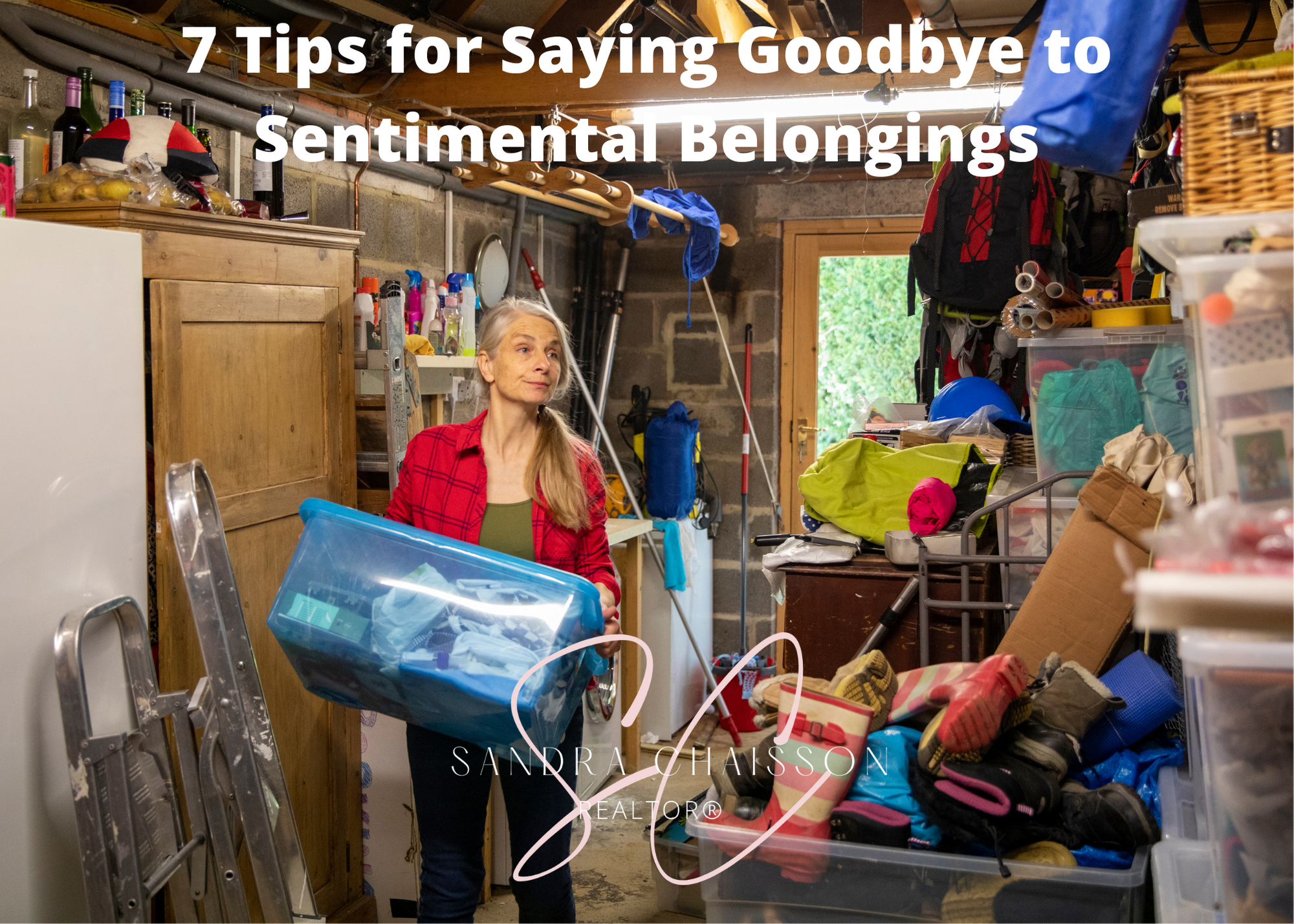
7 Tips for Saying Goodbye to Sentimental Belongings
When I work with clients who are downsizing to a smaller home, one of the hardest chores they face is letting go of sentimental belongings they no longer have room for. Souvenirs collected during travels, family heirlooms, and your children’s keepsakes can be quite stressful to part with. It doesn’t matter whether the items have monetary value or not; in fact, often the most difficult items to let go of are worthless in terms of money, but priceless in sentimental value.

Here are some tips to help you part with belongings you are attached to but no longer want to keep.

1. Remember that our memories reside within us, not within our possessions.
Psychologists say that letting go of sentimental items can be extremely therapeutic. When we keep things, the items occupy both physical and mental space in our lives. It’s healthier to focus on your memories and not the items that represent your memories.

2. Focus on the present. Letting go also helps to bring your focus to the present. Sometimes things are continual reminders of the past and hold us back from living in the present. Dwelling in the past can make one more prone to depression and can affect our ability to deal with stressful situations in our lives. Realize that while we can always cherish our memories, we don’t need the past to be happy in the present.

3. Let go of guilt. People often hold onto an item they don’t want or need because someone special gave it to them or it represents a special person. Learn to let go of the guilt associated with getting rid of gifts you can’t use. Appreciate the thoughtfulness of the giver or the special memory it represents but pass the item on to someone else who can use it or donate it to charity.

4. Don’t save it for your grown children. Times have changed and today more young adults are able to buy their own furnishings. And they aren’t as sentimental about family heirlooms as prior generations were. Talk to your kids now and find out if you are holding onto your china, crystal, and silver tea service for nothing.

5. Compromise with your spouse. It’s not uncommon for one spouse to resent the others’ favorite belongings while holding onto their own special stuff. It’s important to recognize that, while you may not understand your husband’s need to keep a ball cap for every MLB team he’s seen play, he may feel the same way about his hats that you do about keeping every book you have read. Decide together on a reasonable number to keep.

6. Start with the easy stuff. If you have a lot of belongings to sort through, start with the easier decisions and work from there. Often people find that once they get some momentum going it feels good to let go.

7. Write a family memoir. Hold onto your memories with words instead of things by writing your memoir or the story of your family. Writing your story can be very therapeutic and can help you release your hold on tangible items. 
 
Read
RSS

Your First Home Was Never Meant to Be Your Forever Home

There’s a lot of pressure when buying a home, especially your first one.

You want the right neighbourhood, enough bedrooms, a great kitchen, a backyard, parking, maybe a home office and, while we’re at it, something you’ll still love 20 years from now.

But after more than 20 years as a REALTOR® in Halifax, and several moves of my own, there’s one thing I know: Your first home was never meant to be your forever home. It was meant to help you build a life and build the financial foundation for whatever came next.

I believe that because I’ve lived it myself.

I’ve Moved Around Halifax Too

I’ve owned homes in Halifax’s South End, West End, Bedford and Fall River, and I’ve owned three different homes in Bedford alone.

That might sound like a lot of moving, but every home made sense for a different stage of my life.

And here’s the important part: moving has also helped me build wealth through real estate.

Each home gave me somewhere to live and enjoy my life, but it was also an asset. As I paid down mortgages and property values changed over time, I built equity. That equity helped give me options when it was time for the next move.

I didn’t buy my first home expecting it to be my last.

And I’m very glad I didn’t.

Your First Home Is a Starting Point

I think some first time buyers in Halifax, Dartmouth, Bedford and Fall River get stuck on the idea that their first purchase needs to check every box.

It doesn’t.

Maybe your first home is a condo in Dartmouth when you really dream about a house in Bedford.

Maybe it’s a smaller home in Halifax without the dream kitchen.

Maybe you buy farther outside the city because it gives you more house and property for your budget.

That doesn’t mean you’re settling.

You’re starting.

The question I often encourage buyers to ask isn’t, “Could I live here forever?”

It’s, “Does this home make sense for me right now?”

Real Estate Can Be a Stepping Stone

One of the things I’ve learned both personally and professionally is that real estate can be a series of stepping stones.

You buy what makes sense for your life and finances today.

You live there. You pay down your mortgage. You make improvements where they make financial sense. And over time, you may build equity that can help you make your next move.

Of course, real estate values aren’t guaranteed to increase, and every purchase needs to make financial sense on its own. But historically, homeownership has been one way Canadians have built long term household wealth.

That’s why I don’t want first time buyers so focused on finding the “perfect” house that they overlook a really good opportunity.

Your Life Changes, and Your Home Can Too

What you need at 28 may look completely different from what you need at 38, 48 or 62.

Maybe you need more bedrooms.

Maybe you want to leave the city for more space in Fall River.

Maybe you’re tired of commuting and want to be closer to work in Halifax or Dartmouth.

Maybe you want the amenities and neighbourhood feel of Bedford.

Or maybe you’ve reached the stage where the big house and big yard aren’t nearly as appealing as they once were.

I’ve moved because my life changed too.

There’s nothing wrong with a home having served its purpose and then deciding it’s time for something different.

Don’t Forget About the Equity You’ve Built

This is one of the first conversations I have with homeowners who tell me they’d like to move but don’t know whether they can afford it.

Before deciding that you’re stuck, find out what your current home may actually be worth.

How much do you owe on your mortgage?

What could your home realistically sell for in today’s market?

What would you have left after selling costs?

Sometimes homeowners are genuinely surprised by how much equity they’ve accumulated.

That equity may become part of the down payment on the next home. It could allow you to reduce your mortgage. Or it may simply give you choices you didn’t realize you had.

You may be sitting in the house that can help pay for what comes next.

Buying Your First Home in Halifax, Dartmouth, Bedford or Fall River?

Don’t dismiss a good home simply because you can’t picture yourself living there forever.

Look at the bigger picture.

Is it affordable for you? Is it in a location with reasonable resale appeal? Does the layout work? Is the property in good condition? Will it meet your needs for the next several years?

And perhaps most importantly, does buying it make financial sense?

After more than two decades helping people buy and sell real estate in HRM, I can tell you that some of the smartest purchases aren’t necessarily the prettiest houses or the ones with every item on the wish list.

They’re the homes that make sense.

That has certainly been true in my own life.

From the South End and West End of Halifax to Bedford and Fall River, my address has changed many times over the years. Each home represented a different chapter, and collectively, those decisions have helped me build wealth through real estate.

Your first home doesn’t need to be the finish line.

It just needs to be a smart place to start.

Thinking About Your Next Move?

Whether you’re buying your first home, wondering how much equity you’ve built, or thinking about moving within Halifax, Dartmouth, Bedford, Fall River or elsewhere in HRM, start with the numbers.

Sometimes the home you’re living in today is exactly what makes the next chapter possible.

Sandra Chaisson, REALTOR®
ONE Real Estate Group
Royal LePage Atlantic
Serving Halifax, Dartmouth, Bedford, Fall River and communities throughout HRM for over 20 years

Read

Banana Bread

I made "The Ultimate Banana Bread" yesterday - since I have had some free time on my hands right now I've been baking ...

This recipe comes from smittenkitchen.com


You’re going to need 5 bananas which I thought was just bananas...


  • 1/2 cup (4 ounces or 115 grams) unsalted butter, cut into chunks, plus more for pan

  • 1 cup (190 grams) packed light brown sugar

  • 2 slightly heaped cups (about 18 ounces or 510 grams) (updated weight, see why) of mashed banana, from 4 extra-large or 5 medium-large bananas

  • 2 large eggs

  • 1 teaspoon (5 ml) vanilla extract

  • 1 teaspoon fine sea or table salt

  • 1 heaped teaspoon ground cinnamon

  • A few gratings of fresh nutmeg (optional)

  • 1 teaspoon baking soda

  • 1 teaspoon baking powder

  • 2 cups (260 grams) all-purpose flour

  • 2 tablespoons (25 grams) raw or turbinado sugar (on top)

Heat oven to 350 degrees F. Butter a 6-cup (9×5-inch) loaf pan (see note up top if yours is smaller) or coat it with a nonstick cooking spray and set aside.


Melt butter in a large bowl and whisk in brown sugar until smooth, then stir in mashed banana. Whisk in eggs and vanilla. Sprinkle the surface of the batter evenly with salt, cinnamon, nutmeg (if using), baking soda, and baking powder, and whisk until the ingredients are fully dispersed in the batter, and then whisk 10 more times around the bowl because it’s better to be overly cautious than to end up with unmixed pockets. Add flour and stir until combined. Scrape batter into prepared loaf pan. It should come to just over 1/2-inch from the top rim. Sprinkle the top of the batter with the raw sugar; it will seem like a lot but will bake up beautifully.

Bake banana bread for 55 to 65 minutes. It is done when a toothpick or skewer inserted into the bread is batter-free — be sure to check the upper third as well, near the rim of the pan; that’s where I’d find the unbaked pockets of batter hanging out. The bread will get very dark but will not taste burnt.

Let cool in pan. This banana bread is good on the first day but exceptional on the second and third if you can bear to wait.


Read

How To Create a Wants vs Needs List - 4 Easy Steps

The quest for the perfect home within a limited budget can seem daunting. But here's the truth: the perfect home doesn't really exist. Instead, it's about finding a home that aligns with your needs and has the potential to evolve with you. In this blog, I'll share my insights on how to find the right home without compromising on your budget.

  1. Letting Go of Perfection: To embark on your home search, it's crucial to let go of the idea of a flawless property. Instead, focus on finding a home that meets most of your criteria and has room for growth. Flexibility is key when you're working within a budget.

  2. Prioritize Your Must-Haves: Creating a list of must-haves is a powerful way to stay focused and avoid distractions. Consider essential factors like the number of bedrooms and bathrooms, square footage, neighborhood safety, school district quality, commute convenience, and access to public transportation. Don't forget to include features like outdoor space and parking availability.

  3. Distinguishing Wants from Needs: While must-haves are non-negotiable, wants are features that can enhance your living experience but are not crucial. Examples include an updated kitchen, open floor plan, additional living spaces, walk-in closets, energy-efficient appliances, smart home technology, recreational amenities, home office space, and architectural features. Prioritize your wants and be willing to compromise on some if needed.

  4. Embrace Thinking Outside the Box: One of the most valuable pieces of advice is to be open-minded and think creatively. Consider homes that may not initially meet all your criteria but have potential. With a little vision and some elbow grease, you can transform a property into your dream home over time. Renovations and improvements can add value and allow you to personalize the space according to your taste.

Conclusion:

Finding the right home without compromising on your budget requires a strategic approach. It's essential to let go of perfection and focus on what truly matters. Prioritizing your must-haves and distinguishing wants from needs helps you stay on track. Most importantly, don't be afraid to think outside the box and consider homes with potential. By being open-minded and creative, you can turn an imperfect house into a home that perfectly fits your needs and budget.

Now it's your turn! Have you found yourself asking these questions? Do any of these tips resonate with you? Share your thoughts and experiences in the comments below!

Read

Home Seller's FAQ's

Are you planning to sell your property in Halifax, Nova Scotia this spring? If so, you might have some questions about the process. In this blog post, we'll address some frequently asked questions by sellers.

  1. What is the best time of the year to sell a property in Halifax?

Traditionally, in the spring and fall months (March to July 1 and September to December), August is traditionally a slow month to sell a property in Halifax. During these months, the weather is favorable, and people are more likely to go out and view properties. However, the Halifax real estate market has been busy throughout the year, with many buyers looking for properties year-round.

  1. Do I need to get my property inspected before listing it?

No, it's not mandatory to get a home inspection before listing your property for sale, but it's always a good idea. A home inspection will help you identify any issues with your property that you may not have known about. This can save you time and money in the long run, as buyers are likely to request an inspection before purchasing the property.

  1. How do I determine the right asking price for my property?

Pricing your property correctly is crucial to selling it quickly and for the best price possible. You can work with a real estate agent to determine the right asking price for your property. They will analyze the current market conditions, similar properties in the area, and any unique features of your property to come up with a price range that is realistic and competitive.

  1. What documents do I need to sell my property?

As a seller, you will need to provide the following documents:

  • Property deed
  • Location Certificate (if available)
  • Most Recent Tax Bill
  • Any warranties for appliances or systems included in the sale
  • Disclosure statement outlining any known issues with the property - this document is known as a Property Disclosure statement.
  • Heating Costs and NSP Costs
  • A copy of any Lease Agreements
  • Well and Septic Certificate (if available)
  • Shared Well or Shared Driveway Agreement
  • Easements or Restrictive Covenants
  • Condo Documents (if the property is a condo)
  • Any receipts for upgrades - Details of any recent upgrades
  • Building permit and final occupancy permit (if available)
  • Copies of any leased equipment that is to be assumed by the buyers 
  1. What costs should I expect to pay when selling my property?

As a seller, you will be responsible for paying the following costs:

  • Real estate agent commission (usually around 5% of the sale price)
  • Legal fees (usually around $1,500 - $2,000)
  • Any outstanding mortgage balance or liens on the property
  • Any mortgage penalties.
  1. How long does it take to sell a property in Halifax?

The time it takes to sell a property in Halifax can vary depending on factors such as location, condition of the property, and current market conditions. On average, properties in Halifax sell within 30-60 days of being listed on the market.

Selling a property can be a complex process, but with the right information and guidance, it can be a smooth and successful transaction. If you have any further questions about selling your property in Halifax, it's always best to consult with a local real estate professional.

How often will we communicate?
 
Communication is key to an easy and successful sale. I will keep you appraised of events every step of the way. You are welcome to reach out to me with questions or concerns. When we go over the listing information, we will discuss our preferred means of communication and schedules to make sure we know each other’s availability and boundaries.

Thinking of selling? I'm here to help! Shoot me a message or give me a call today.

Read

Top 10 great reasons to live in Halifax
  1. Halifax is reputed to have one of the highest number of bars per capita of any Canadian city! Which means we are FUN!

  2. Halifax has a rich and varied history, from its role as a major port city in the days of British colonial rule, to its importance as a military and naval center in both world wars.

  3. With its stunning harbor and coastal views, Halifax offers a picturesque and scenic living environment.

  4. Friendly people: Haligonians are known for their friendly and welcoming nature, making it a great place to live and build relationships.

  5. Halifax has a strong and growing economy with a diverse mix of industries, including finance, technology, and tourism.

  6. With SIX universities located in the city, Halifax offers a great education system for students of all ages.

  7. From taxis to buses, there is no shortage of ways to get around in Halifax. However, the Halifax  Ferry is certainly a unique way. This harbour ferry service has been connecting the city of Halifax to neighbouring Dartmouth for 269 years.

  8. The Halifax Waterfront is a bustling hotspot in the city. With one of the world's longest urban boardwalks spanning the length of the waterfront for 4 kilometres (2.5 miles), from Pier 21 at the Halifax Seaport to Casino Nova Scotia, it is easy to spend a day exploring here.

  9. Affordable housing: Compared to other cities in Canada, housing in Halifax is relatively affordable, making it an attractive option for those looking for a good standard of living.

  10. Natural beauty: With its proximity to nature reserves, parks, and hiking trails, Halifax offers easy access to some of Canada's most beautiful natural landscapes.

Read

What Do Showings Look Like?
They say a picture is worth a thousand words, and really, I get the sentiment and all. But I’m guessing whoever said that wasn’t in the market for a new home. The truth is listing photos can only take you so far. Sooner or later, buyers wanna get off their smartphones and get inside some homes. ⁣
Enter showings—one of the most thrilling parts of the entire home buying journey! If you’ve never experienced a home showing, here’s what you can expect. First, though, YOU have a little work to do. ⁣
Before touring a home, make your list of non-negotiables. Take the list with you and refer back to it as you walk around. Fight the urge to get carried away by a home that has lots of bells and whistles but doesn’t meet your punch list.⁣
Next, you schedule a time to meet your agent at the home. Take your time and ask your agent any and all questions that come to your mind. ⁣
Take special note of:⁣
Curb appeal and lawn condition: The property's exterior can easily be overlooked. Pay attention to your first impression of the home. Do you love it, or are you less-than-enthused?⁣
Cleanliness and odor. Use all your senses as you enter the home. Do you smell mold or mildew? Cigarette smoke? Does the air feel damp?⁣
Wall and floor condition: Pay attention to warped floors, watermarks, and cracks in the walls which often point to more significant problems with the house.⁣
Integrated systems and fixtures: Don’t neglect checking out the HVAC, electrical wiring, hot water heater, and other pipes and faucets. ⁣
A showing can last from 15 minutes (if the house is a total dud) to an hour or more (Could it be the one??). Just like most things in life, the more showings you attend, the quicker you’ll be able to determine if a home is right for you. ⁣
Are you ready to get inside some homes you’re scrolling through online? Reach out and let’s set up a time to meet up!⁣
Read

Upsize or Downsize: Which is Your Best Move?

Upsize or Downsize: Which is Your Best Move?


Deciding if it is time for your family to upsize or downsize is not always a clear choice. There are factors to consider that might push you to take the leap or stay put for a while longer. Whether you are thinking about upsizing so your family can spread out or purging possessions so you can downsize, here are some questions to ponder.


1. How are you using your current space?


Do your family members feel like they don’t have adequate privacy or space to do their own thing?  Are you tired of working at the dining table and really need an office or workshop? Is having the kids share bedrooms just not working out? Maybe an upsize is warranted. On the other hand, do you have rooms that aren’t being used, or are you tired of paying property taxes on more house than you need? Check for the downsize column!


2. Have you considered the maintenance costs?


If upsizing is on your mind, consider the added costs for maintaining a larger home and property, whether in money or time. Will you be able to keep up with cleaning, lawn care, and general maintenance issues that come with owning a home? If you are ready to cross maintenance off your to-do list, perhaps you are ready to downsize to a more manageable property or one where the HOA handles part of the job.


3. What are your outdoor space needs?


Are you ready to give up having a yard or garden to downsize to a maintenance-free space? Do you have pets that need outdoor space? Do you need more outdoor space for your children to play or your dog to run around in? The size of the house is one thing, but the property is important also.


4. Have you looked to the future?


What do you expect your needs to be in the next five, ten, or twenty years? Do you want a large home where your children and grandchildren will come for vacations and holidays, or will you be spending those times at their homes? Will you want to entertain groups of friends, or do you foresee going out for your entertainment? What will happen if your spouse passes; will you want to stay in the home on your own?


5. Do the financial implications add up in your favor?


Can you handle the higher costs involved with a larger home, or are you ready to cut costs with a downsize? Consider where you stand on your current mortgage. Are you alright with starting a new mortgage at this point in your life, or are you in a position to purchase in cash? What are the tax implications for your move?  


6. Is it the right market to upsize or downsize?


A seller’s market is hot for those looking to sell a larger home and downsize. Upsizing may be riskier in a big seller’s market, but if your family would be happier in a larger home, it might be worth the leap.


Whatever questions you have about purchasing your next home, I’d be honored to assist you. So let’s work together to make sure your next move is the right one.

Read

7 Tips for Saying Goodbye to Sentimental Belongings
When I work with clients who are downsizing to a smaller home, one of the hardest chores they face is letting go of sentimental belongings they no longer have room for. Souvenirs collected during travels, family heirlooms, and your children’s keepsakes can be quite stressful to part with. It doesn’t matter whether the items have monetary value or not; in fact, often the most difficult items to let go of are worthless in terms of money, but priceless in sentimental value.

Here are some tips to help you part with belongings you are attached to but no longer want to keep.

1. Remember that our memories reside within us, not within our possessions.
Psychologists say that letting go of sentimental items can be extremely therapeutic. When we keep things, the items occupy both physical and mental space in our lives. It’s healthier to focus on your memories and not the items that represent your memories.

2. Focus on the present. Letting go also helps to bring your focus to the present. Sometimes things are continual reminders of the past and hold us back from living in the present. Dwelling in the past can make one more prone to depression and can affect our ability to deal with stressful situations in our lives. Realize that while we can always cherish our memories, we don’t need the past to be happy in the present.

3. Let go of guilt. People often hold onto an item they don’t want or need because someone special gave it to them or it represents a special person. Learn to let go of the guilt associated with getting rid of gifts you can’t use. Appreciate the thoughtfulness of the giver or the special memory it represents but pass the item on to someone else who can use it or donate it to charity.

4. Don’t save it for your grown children. Times have changed and today more young adults are able to buy their own furnishings. And they aren’t as sentimental about family heirlooms as prior generations were. Talk to your kids now and find out if you are holding onto your china, crystal, and silver tea service for nothing.

5. Compromise with your spouse. It’s not uncommon for one spouse to resent the others’ favorite belongings while holding onto their own special stuff. It’s important to recognize that, while you may not understand your husband’s need to keep a ball cap for every MLB team he’s seen play, he may feel the same way about his hats that you do about keeping every book you have read. Decide together on a reasonable number to keep.

6. Start with the easy stuff. If you have a lot of belongings to sort through, start with the easier decisions and work from there. Often people find that once they get some momentum going it feels good to let go.

7. Write a family memoir. Hold onto your memories with words instead of things by writing your memoir or the story of your family. Writing your story can be very therapeutic and can help you release your hold on tangible items. 
 
Read